
Be cautious not to expose them to too much direct afternoon sun, which can scorch the leaves. Finding the right balance of light will vary depending on your climate and the specific needs of your hydrangea species.
8. Revive Container Hydrangeas With Root Refresh and Repotting
Container-grown hydrangeas may need a bit of extra care to wake up and thrive. Start by gently removing the plant from its pot and inspecting the roots. If the roots are circling the pot or appear congested, it’s time to refresh them.
Trim away any dead or overly long roots, and repot the hydrangea into a slightly larger container with fresh, high-quality potting mix. Ensure the new pot has good drainage to prevent waterlogging.
9. Try Viral Coffee-Ground and Eggshell Tricks—The Safe Way
Coffee grounds and eggshells are popular home remedies for boosting plant health, and they can be used with hydrangeas as well. Coffee grounds add nitrogen to the soil, while eggshells provide calcium.
Use these amendments sparingly—just a thin layer of coffee grounds around the base of the plant and crushed eggshells mixed into the soil. Too much can alter soil pH and nutrient balance, so moderation is key.
10. Use Epsom Salt and Compost Tea to Fuel Bigger Blooms
Epsom salt, rich in magnesium, is often used to encourage flower production. Dissolve 1 tablespoon of Epsom salt in a gallon of water and use it to water your hydrangeas once a month during the growing season.
Compost tea, another gardener favorite, can provide a nutrient-rich boost. Soak a bag of compost in water for a day or two, then use the liquid to water your plants. This organic fertilizer can help increase blooms and improve overall plant health.
continued on next page
1. Protect Swelling Buds From Late Frost Shocks
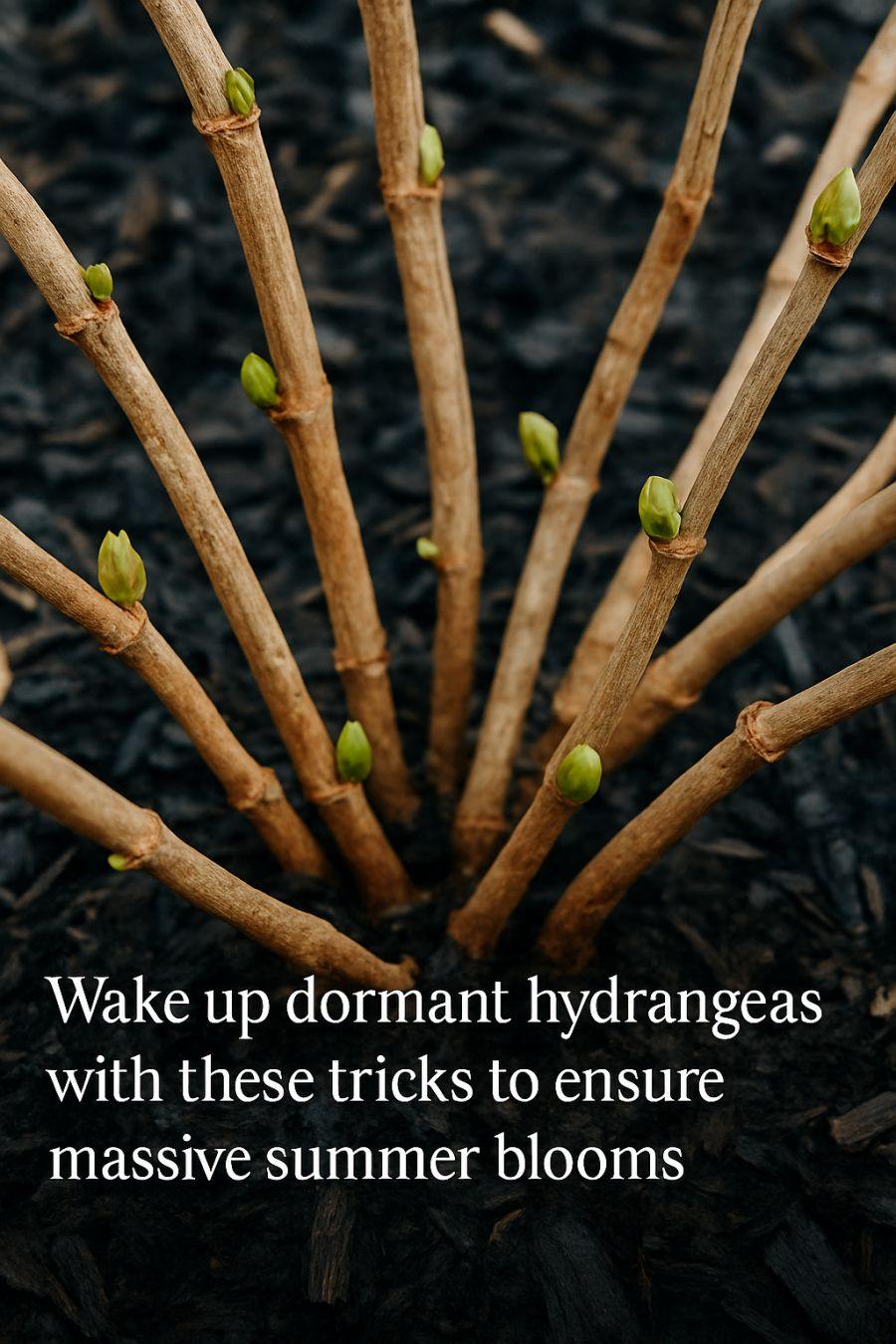
Late frosts can be devastating to hydrangeas, especially as buds begin to swell in spring. Keep an eye on weather forecasts and be prepared to protect your plants with frost cloths or old blankets on particularly cold nights.
Cover the plants in the evening, making sure the cover extends to the ground to trap warmth. Remove the covering in the morning once temperatures rise, to prevent overheating and ensure they receive sunlight.
12. Train and Support Stems Now for Massive Summer Flower Heads
As hydrangeas grow, their large, heavy blooms can cause stems to droop or even break. Early spring is the best time to start training and supporting these stems. Use plant supports, such as stakes or cages, to encourage upright growth.
ADVERTISEMENT
