
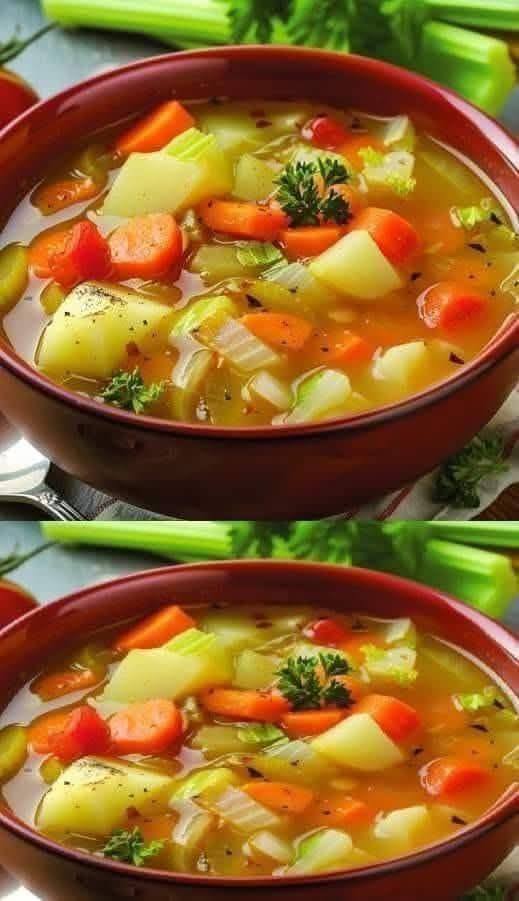
The soup is naturally low-fat and high-fiber.
You can add other vegetables: zucchini, spinach, green beans, cauliflower.
For extra protein: add beans, lentils, or chickpeas.
For richer flavor: add bay leaf during simmering.
For thicker soup: mash a few potato cubes into the broth.
Tips for Best Results
Cut vegetables uniformly so they cook evenly.
Simmer gently, not hard boil—this preserves nutrients.
Make it ahead: flavor improves after 12–24 hours.
Freeze well for up to 3 months.
Servings
This recipe makes 4 large bowls (or 6 small servings).
Approximate Nutritional Information (per 1 large bowl)
(Values vary depending on exact amounts)
Calories: 110–150
Protein: 3–4 g
Fat: 2–4 g
Carbohydrates: 22–28 g
Fiber: 4–6 g
Sodium: depends on broth used
Potential Benefits of This Soup
Not medical claims—just general nutritional benefits:
1. High fiber
Helps promote satiety and supports stable blood sugar levels as part of balanced eating.
2. Low calorie
Useful for weight-friendly meal planning.
3. Hydrating & nutrient-rich
Vegetables supply vitamins A, C, K, and minerals.
4. Heart-friendly
Low fat and contains potassium-rich vegetables.
Q & A About the Recipe
Q: Is this soup good for people watching their blood sugar?
A: It can be supportive due to its high fiber and low fat content, but potatoes add carbohydrates. Using half potatoes or swapping with cauliflower can make it lower-carb.
Q: Can I add protein?
A: Yes—beans, chicken breast, tofu, or lentils all work.
Q: Can this be made without oil?
A: Absolutely. Simmer all ingredients directly in broth.
Q: Can I blend it?
A: Yes—it becomes a creamy vegetable puree without needing cream.
Q: How long does it last?
A: 4–5 days refrigerated in an airtight container.
Leave a Comment
ADVERTISEMENT
