
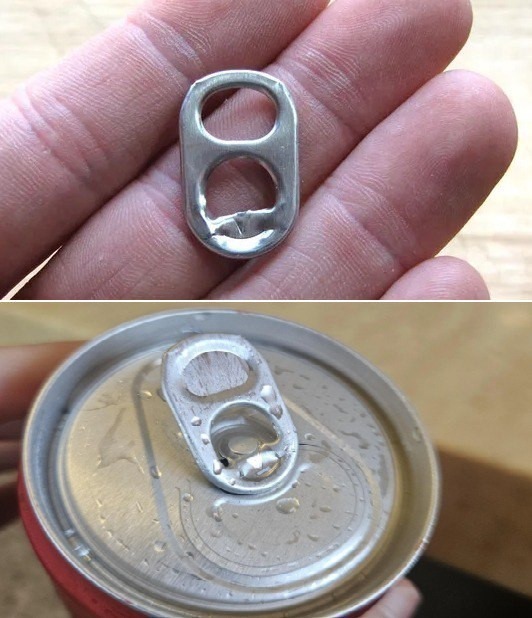
The Hidden Function #1: Pressure Control
Aluminum cans are sealed under pressure, especially carbonated drinks. Without a controlled opening mechanism, popping a can could be dangerous.
The ring is engineered to:
Release pressure gradually
Prevent explosive rupture
Direct force downward, not outward
When you pull the ring, the initial puncture creates a tiny opening that allows gas to escape before the main opening fully collapses. That’s why you hear a hiss before liquid flows freely.
This pressure-management role is one of the tab’s most critical but least noticed functions.
The Hidden Function #2: Preventing Sharp Edges
Early soda cans used pull-off tabs that detached completely. While convenient, they caused serious problems:
Sharp edges cut fingers and lips
Tabs became dangerous litter
Wildlife ingested them
Beaches and parks were polluted
The modern stay-on tab was invented specifically to eliminate these risks.
When the ring is pulled, it pushes the scored aluminum inward, leaving:
No loose metal pieces
No razor-sharp edges
A smooth, rolled opening
This safety function is one of the main reasons the design has barely changed in decades—it works incredibly well.
The Hidden Function #3: Structural Reinforcement
Here’s something most people never realize:
The ring actually helps strengthen the can lid before it’s opened.
The raised ring adds rigidity to the top of the can, helping it withstand:
ADVERTISEMENT
