
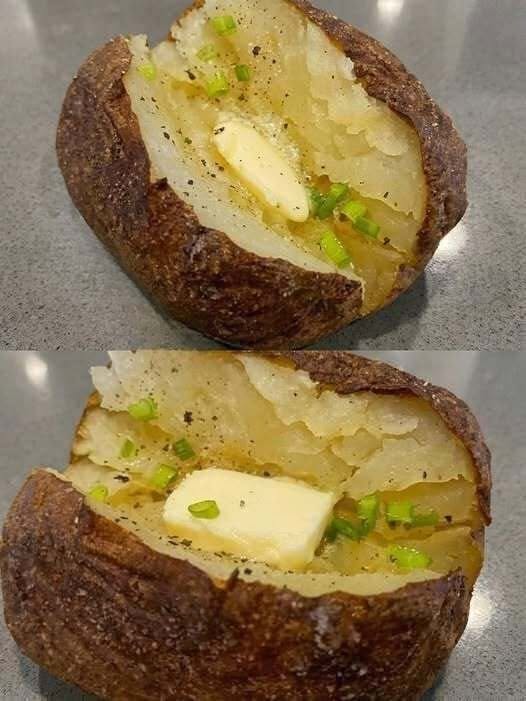
Preparation is remarkably straightforward, but attention to detail can make a significant difference in the final result. Begin by preheating the oven to 400 degrees Fahrenheit, or approximately 200 degrees Celsius. This temperature provides the perfect environment for creating a crisp exterior while allowing the inside to cook evenly. While the oven heats, thoroughly wash the potatoes under cold running water to remove any dirt or debris from the skin. Once clean, dry them completely with a towel. This step is often overlooked, yet it is crucial because excess moisture can create steam during cooking, preventing the skin from becoming crispy.
After drying the potatoes, use a fork to pierce the surface several times on all sides. These small holes allow steam to escape safely while the potatoes bake, reducing pressure inside and helping them cook evenly. Next comes one of the most important secrets to achieving restaurant-quality results. Rub each potato generously with olive oil or melted butter, ensuring the entire surface is lightly coated. Then sprinkle coarse sea salt over the skin. This combination helps draw out moisture while encouraging the skin to become beautifully golden, crisp, and flavorful.
Place the prepared potatoes directly on the oven rack or on a wire baking tray that allows hot air to circulate freely around them. Depending on their size, most potatoes require between forty-five minutes and one hour to become fully cooked. As they bake, the skin gradually crisps while the interior starches soften into a light, fluffy texture. A properly baked potato should feel slightly firm on the outside while yielding easily when gently squeezed. Inserting a fork into the center should require almost no effort, indicating that the inside has reached perfect tenderness.
The most satisfying moment arrives when the potato is removed from the oven and sliced open. As the skin separates, a cloud of fragrant steam escapes, revealing the soft interior hidden beneath the crispy shell. From that point, the possibilities become nearly endless. Traditional toppings such as butter, sour cream, shredded cheddar cheese, crispy bacon pieces, and fresh chives create a classic steakhouse-style experience that never goes out of fashion.
For those seeking lighter or more vegetable-focused options, baked potatoes provide an excellent canvas for creativity. Roasted broccoli, sautéed mushrooms, caramelized onions, grilled peppers, spinach, tomatoes, and other vegetables can transform a simple potato into a wholesome and colorful meal. The neutral flavor of the potato allows it to pair beautifully with both rich and fresh ingredients.
ADVERTISEMENT
