
Use filtered or distilled water
Increase humidity around the plant
Flush the soil occasionally to remove salt buildup
Adjust watering schedule
Yellowing Leaves
Causes:
Overwatering
Poor drainage
Insufficient light
Natural aging of older leaves
Solutions:
Allow soil to dry out between waterings
Ensure pot has adequate drainage holes
Move to a brighter location
Remove older leaves at the base of the plant
Fading Variegation
Causes:
Insufficient light
Aging of the plant
Solutions:
Move to a brighter location (still avoiding direct sun)
Propagate new plants from healthy plantlets
Pests
Spider Plants are relatively pest-resistant but can occasionally attract:
Spider mites:
Look for fine webbing and stippled leaves
Treat with insecticidal soap or neem oil
Increase humidity to discourage infestation
Aphids:
Check for small clusters on new growth
Remove with a strong stream of water
Apply insecticidal soap if needed
Mealybugs:
Identify by white, cotton-like deposits
Remove with alcohol-dipped cotton swab
Treat severe infestations with appropriate insecticide
Frequently Asked Questions
ADVERTISEMENT
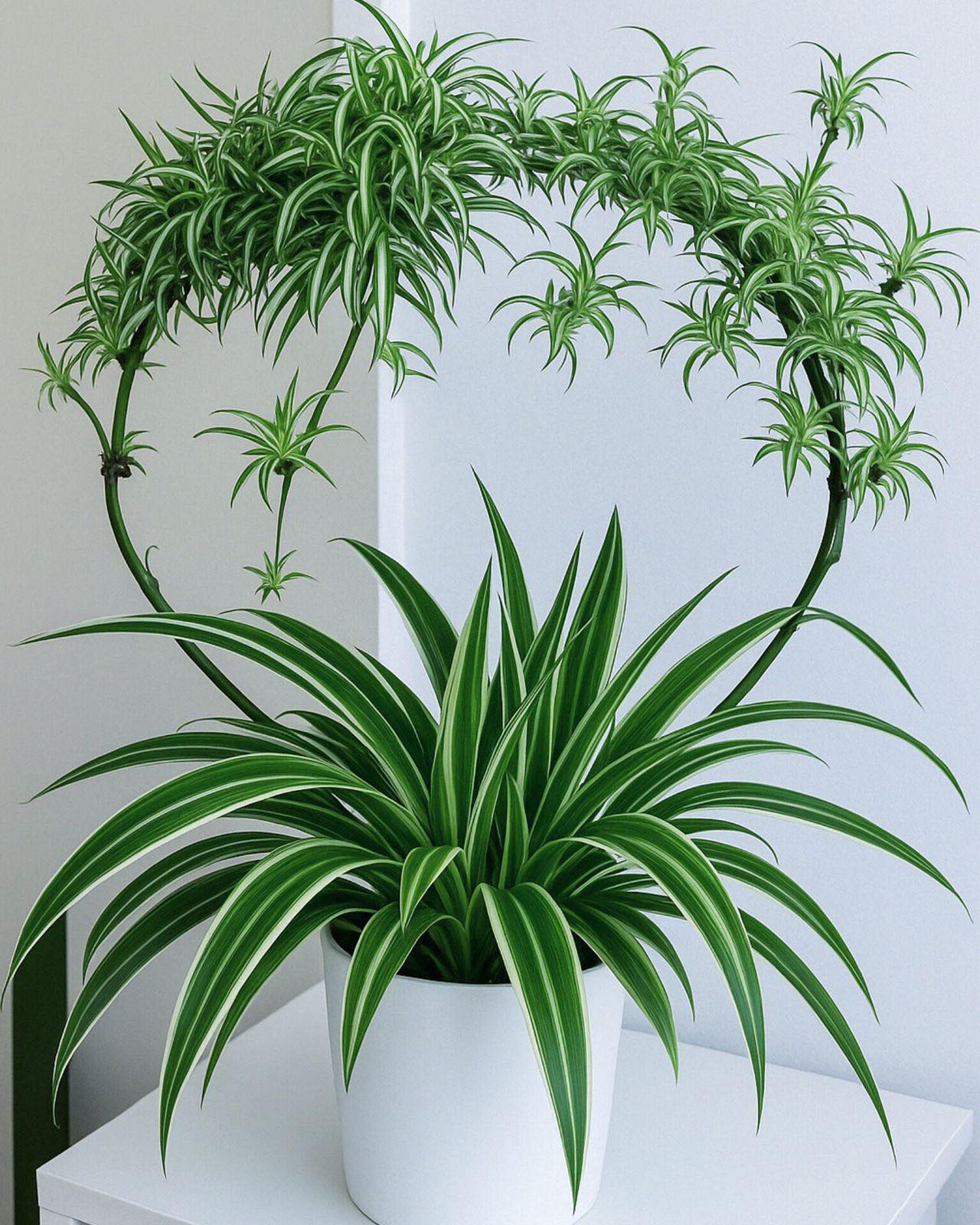
Why isn’t my Spider Plant producing babies? Spider Plants typically need to reach maturity (about one year old) before producing plantlets. Ensuring proper light conditions and avoiding overpotting can encourage flowering and subsequent plantlet development.
Are Spider Plants safe for pets? Yes! Spider Plants are non-toxic to cats and dogs, making them a safe choice for pet owners. Some cats may be attracted to the dangling plantlets, so consider placement to minimize temptation.
ADVERTISEMENT
