
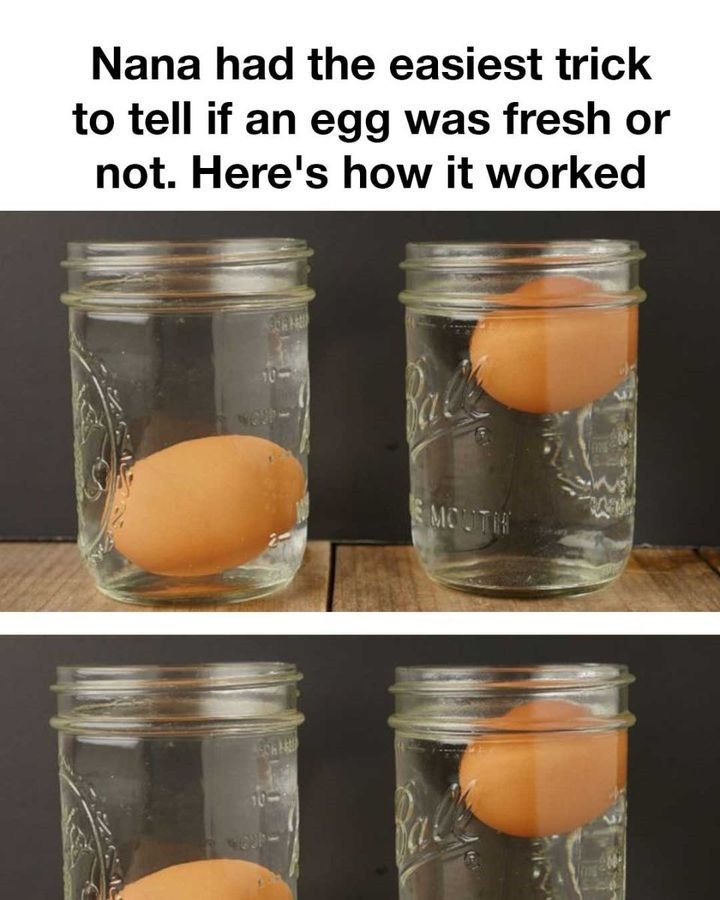
Other Methods for Checking Egg Freshness
While Nana’s water test is the easiest, there are a few other methods:
Candling: Shining a light through the egg to check the air cell (used by farmers).
Crack Test: Fresh eggs have firm yolks and thick whites.
Shake Test: If you hear sloshing when shaking, the egg is likely old.
Though effective, these methods either need experience or special tools—making the water test the clear winner for everyday cooks.
Common Myths About Egg Freshness
see next page
Minor cracks = automatic spoilage: Not always. If the crack is clean and the egg sinks, it may still be fine.
Cloudy egg whites mean spoilage: Actually, cloudy whites indicate freshness—the cloudiness comes from carbon dioxide still present in the egg.
Blood or meat spots mean bad eggs: These are harmless and can occur even in fresh eggs.
Knowing the facts helps you use your eggs wisely.
Frequently Asked Questions About Egg Freshness
Q: How long do eggs stay fresh?
A: About 3-5 weeks when properly refrigerated.
Q: Can I use eggs past their expiration date?
A: If they pass the float test, they are usually still safe.
Q: Should eggs be refrigerated?
A: Yes—cold storage extends freshness.
Q: What should I do with eggs that float?
A: Discard them—they are no longer good.
Conclusion: Trust Nana’s Time-Tested Wisdom
Nana’s egg freshness test remains as practical today as it was generations ago. With nothing more than water and a few seconds of your time, you can guarantee the safety and quality of your eggs. Trust this simple, reliable method—and bring a little old-school wisdom into your modern kitchen.
ADVERTISEMENT
