
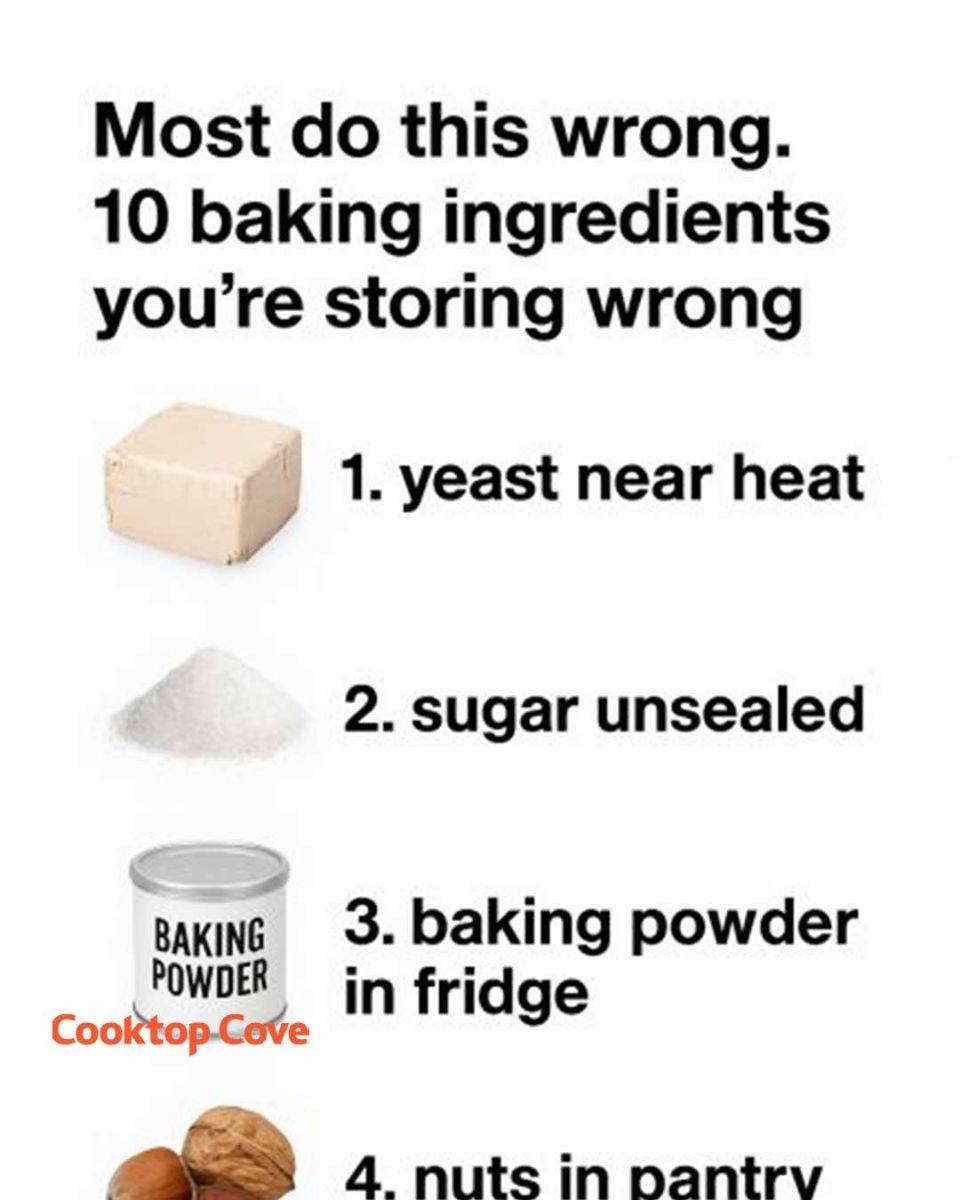
1. Yeast Near Heat: A Recipe for Disaster
Yeast is a living organism that thrives in certain conditions and dies in others. Storing yeast near heat sources, such as ovens or stoves, can cause it to become inactive. Yeast should be stored in a cool, dry place, ideally in a refrigerator or freezer if it is not used frequently.
For active dry yeast, storing it in a sealed container in the fridge can extend its life for up to a year. Always check the expiration date, and if in doubt, proof the yeast before use by adding it to warm water with a pinch of sugar. If it doesn’t bubble within 10 minutes, it’s time to replace it.
2. Sugar Unsealed: Sweetness at Risk
Sugar is hygroscopic, meaning it absorbs moisture from the environment. If left unsealed, it can clump together and harden. To prevent this, store sugar in an airtight container away from moisture.
Brown sugar is particularly prone to hardening. To keep it soft, store it in an airtight container with a piece of bread or a terracotta disk designed for this purpose. If it does harden, placing a damp paper towel over it in a microwave-safe bowl and microwaving in 20-second intervals can help restore its texture.
3. Baking Powder in the Fridge: A Common Misstep
Baking powder should be kept in a cool, dry place, but not in the refrigerator. The moisture in the fridge can cause it to lose its potency. Instead, store it in a pantry in its original container or another airtight container.
To check if baking powder is still active, mix a teaspoon with a half-cup of hot water. If it bubbles vigorously, it’s still good to use. If not, it’s time to replace it.
4. Nuts in the Pantry: The Freshness Dilemma
Nuts contain oils that can turn rancid if stored improperly. Keeping them in the pantry can expose them to heat and light, accelerating rancidity. Instead, store nuts in an airtight container in the fridge or freezer.
This will keep them fresh for months, preserving their flavor and nutritional value. Before using, bring them to room temperature to restore their texture.
5. Flour in the Wrong Container: Keep It Airtight
Flour is best stored in an airtight container to prevent it from absorbing moisture and odors. If left in its original paper packaging, it can easily become contaminated.
For long-term storage, especially for whole grain flours that contain more oils, keep them in the fridge or freezer. White flour can last up to a year in a cool, dry pantry, but whole grain flours are best used within three months unless refrigerated.
6. Chocolate in the Fridge: A Flavor Faux Pas
Storing chocolate in the refrigerator can cause it to develop a white film known as bloom, which affects texture but not taste. This happens when the sugar or fat in the chocolate crystallizes.
To preserve the quality of chocolate, store it in a cool, dry place away from heat and light. If you must refrigerate it, wrap it tightly in plastic wrap and place it in an airtight container to prevent it from absorbing fridge odors.
7. Vanilla Extract in Sunlight: Preserve the Aroma
Vanilla extract should be stored in a cool, dark place. Exposure to light and heat can degrade its flavor over time.
Keep it in its original dark glass bottle, which helps protect it from light. If stored correctly, vanilla extract can last indefinitely, continuing to add rich flavor to your baked goods.
ADVERTISEMENT
