
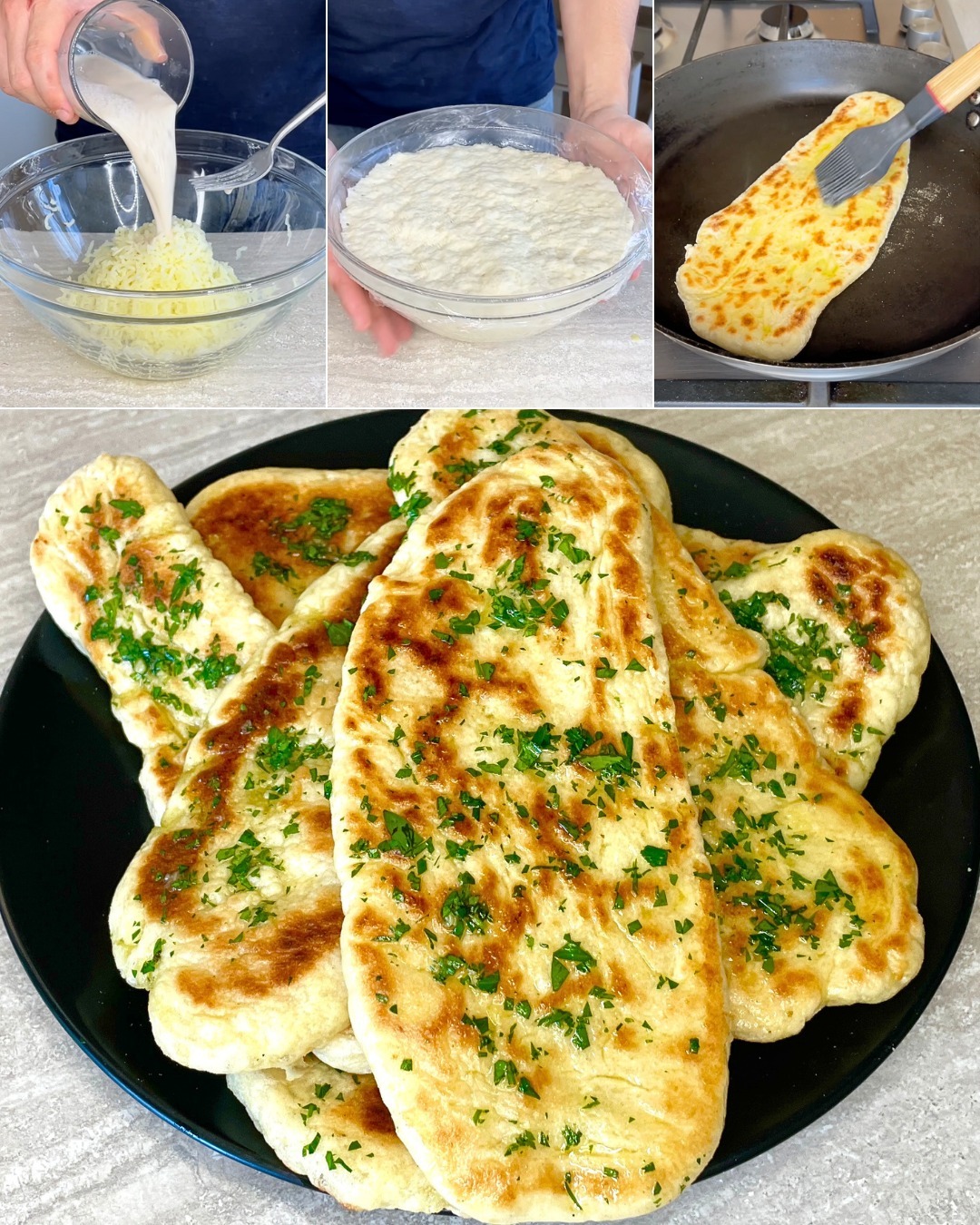
During this time, the dough develops flavor and airiness. Patience here makes a huge difference in the final result.
Step 3: Shape the Flatbreads
Once risen, divide the dough into equal portions. Roll each piece into a ball, then gently flatten into round discs, about the size of a small plate.
Dust lightly with flour to prevent sticking, but don’t overdo it — too much flour can make the bread dry.
Step 4: Cook on a Hot Skillet
Heat a dry skillet or pan over medium heat. Place one dough round into the pan and cook for about 2 minutes per side.
You’ll see bubbles form and the bread puff slightly — that’s exactly what you want. Flip once golden spots appear, then cook the other side until evenly done.
Repeat until all the dough is cooked.
Step 5: Finish While Warm
As soon as each Bazlama comes off the skillet, you can brush it lightly with olive oil or butter. Some people add garlic or herbs, but even plain, the flavor is deeply satisfying.
Stack them and keep covered to stay warm.
continued on next page
Why Skillet-Cooked Bread Tastes Different
Cooking bread directly on a hot surface creates a unique texture that ovens can’t quite replicate. The direct heat forms a lightly crisp exterior while trapping steam inside, which keeps the bread fluffy.
This method also gives you control. You can see, flip, and adjust instantly — making Bazlama surprisingly forgiving, even for beginners.
How Bazlama Is Traditionally Served
Bazlama is incredibly versatile. In many homes, it appears on the table multiple times a day.
Common Ways to Enjoy It:
With olive oil, honey, or jam for breakfast
Alongside soups and stews to soak up rich flavors
With grilled meats or vegetables
Used as a wrap for sandwiches
Torn and shared with dips like yogurt or mashed vegetables
It’s the kind of bread that disappears quickly, often before the rest of the meal is finished.
Bazlama Compared to Other Flatbreads
While Bazlama may look similar to naan or pita, it has its own identity.
Softer than pita, without a pocket
Less chewy than naan, but still substantial
More rustic, with a homemade, comforting feel
Its skillet cooking method gives it a character that feels both ancient and modern at the same time.
Storage and Reheating Tips
Bazlama is best eaten fresh, but it stores well.
Keep at room temperature in an airtight container for up to 2 days
Freeze cooked breads for longer storage
Reheat gently in a skillet or wrapped in a towel to restore softness
Avoid microwaving if possible — it can make the bread rubbery.
ADVERTISEMENT
