
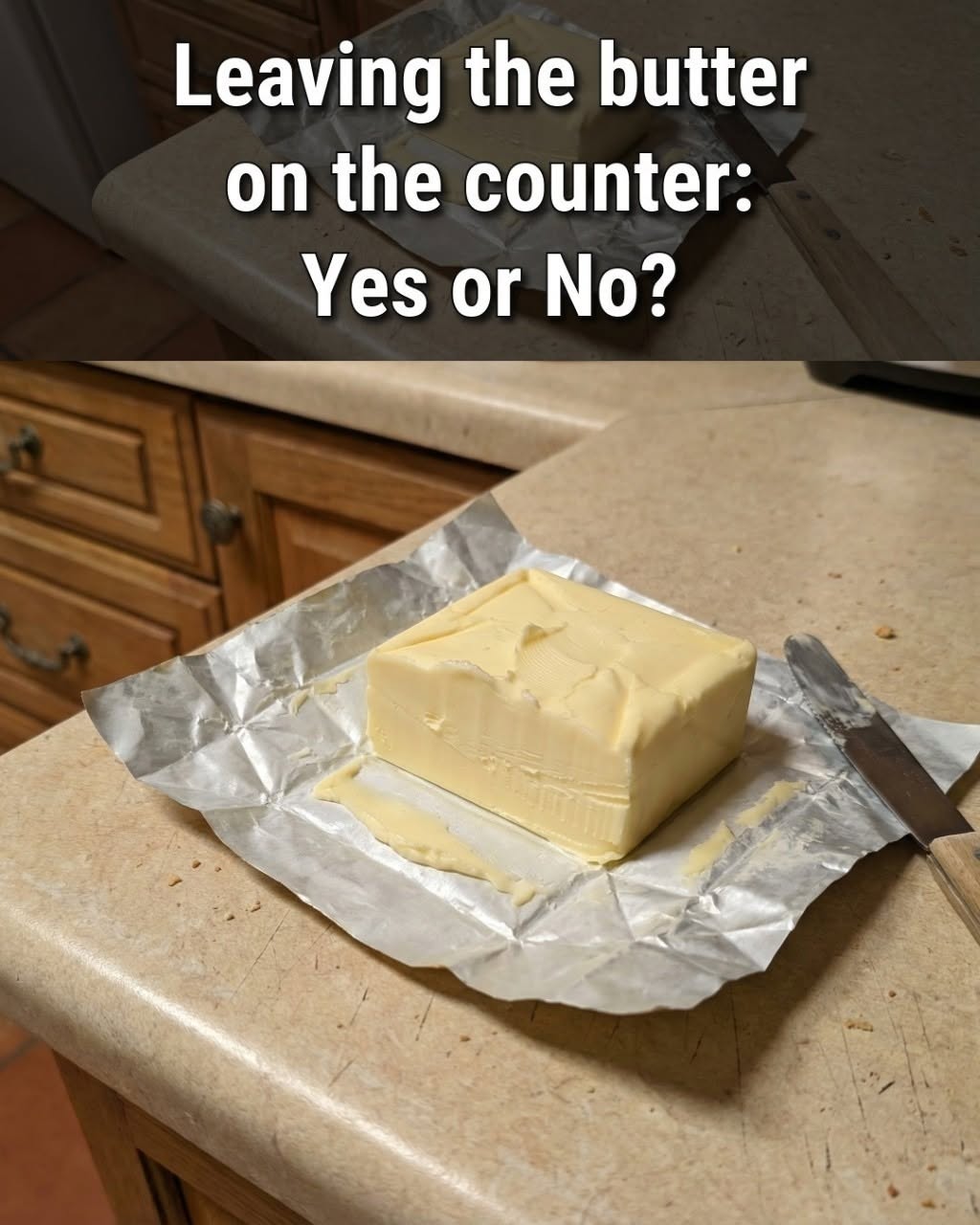
Why Butter Is Relatively Stable
Butter is about 80% fat, with low water and protein content—the very things bacteria need to grow. Plus:
Salted butter contains salt, which acts as a natural preservative.
Pasteurization kills harmful bacteria during production.
This makes butter far more stable than milk, cream, or yogurt.
Key fact: Rancidity (off-flavor from fat oxidation) is more likely than bacterial spoilage—but it’s still not ideal.
When Room-Temperature Butter Is Not Safe
Avoid leaving butter out if:
It’s unsalted (no preservative effect)
It’s whipped (more air = faster oxidation)
You’ve mixed in garlic, herbs, honey, or fruit (introduces moisture and microbes)
Your kitchen is above 70°F (21°C) or very humid
You live in a hot climate or during summer heatwaves
Signs butter has gone bad:
ADVERTISEMENT
See next page:
ADVERTISEMENT
