
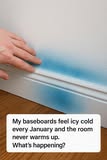
Every winter, as temperatures drop, many homeowners experience a peculiar problem: the baseboards in their homes feel icy cold, and despite the thermostat being set to a comfortable temperature, the room never quite seems to warm up. This issue is not only uncomfortable but can also lead to higher energy bills, as your heating system works overtime to compensate for the cold air seeping in. Understanding the root causes of this problem can help you take targeted actions to improve the comfort of your home and increase energy efficiency.
In this article, we will explore the various reasons why your baseboards may feel cold during the winter months. From the stack effect and hidden gaps behind baseboards to poorly insulated walls and HVAC issues, we will delve into each potential cause and provide actionable solutions to help you address the problem. Whether you’re dealing with an older home or a newly constructed one, these insights will equip you with the knowledge needed to keep your home warm and cozy during the coldest months of the year.
1. Why Your Baseboards Turn Icy While the Thermostat Says You’re Fine
One of the most common reasons your baseboards feel icy despite a warm thermostat reading is uneven heating distribution. Central heating systems often struggle to maintain consistent temperatures throughout the home, especially in rooms with exterior walls. The heat tends to rise, leaving the lower areas, such as baseboards, colder. This disparity can be exacerbated by poor insulation or drafts, which allow cold air to enter and settle near the floor.
ADVERTISEMENT
